
When "Transparent" Isn't Really Transparent
Transparency is one of the most sought-after properties in modern material formulations. From clear wood coatings to optical adhesives, from transparent plastic films to electronic encapsulants — the demand for see-through, high-clarity products is growing across virtually every industry. But achieving true transparency in a filled system is far more complex than it appears.
The problem often hides in the most unexpected place: crystalline water.
Many conventional transparent fillers — sodium silicate-based powders, calcium sulfate whiskers, and various hydrated mineral fillers — contain water of crystallization locked within their crystal structure. At room temperature, this water is invisible. But when the ambient temperature rises, when humidity fluctuates, or when the material is processed at elevated temperatures, that crystalline water begins to migrate, evaporate, or react. The result? Clouding, blushing, white haze, transparency loss, and in severe cases, surface defects and adhesion failure.
This is not a minor cosmetic issue. In precision applications — optical adhesives, electronic packaging, high-end furniture coatings — even a 2% drop in transparency can mean the difference between a premium product and a rejected batch.

The Engineering Solution: Anhydrous Transparent Powder
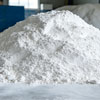
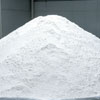
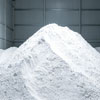
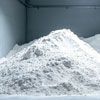
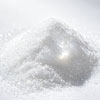
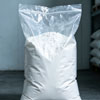
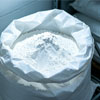
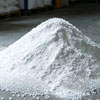
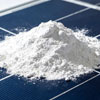
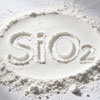
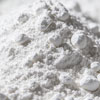
Anhydrous transparent powder, developed by Anywhere New Material (Guangzhou) Co., Ltd., is an environmentally friendly inorganic non-metallic functional powder material that is specifically engineered to be completely free of crystalline water. This is not achieved by simple drying — it requires a fundamentally different material composition and manufacturing process.
The powder is built on a composite silicate system incorporating aluminum, sodium, potassium, and oxygen — a multi-element architecture that inherently lacks the hydrated crystal phases found in conventional transparent fillers. The result is a material whose transparency is structural, not conditional: it does not depend on ambient conditions, processing temperature, or storage humidity.
Six Technical Advantages That Set It Apart
1. True Structural Transparency — No Conditional Clouding
Because there is no crystalline water to migrate or evaporate, the transparency of anhydrous transparent powder remains stable across the full operating temperature range. Whether the final product is subjected to 200°C processing temperatures, high-humidity tropical climates, or thermal cycling from -40°C to 80°C, the clarity does not change. This is the single most important advantage over hydrated filler systems.
2. Selectable Refractive Index for Perfect Matching
One of the most powerful features of this material is its refractive index tunability. Different grades offer refractive indices from 1.48 to 1.53, allowing formulators to match the RI of their resin system precisely. When the filler and resin RI values are aligned, light scattering at the filler-matrix interface is minimized, and transparency is maximized — a fundamental optical principle that many formulators overlook.
3. High Filling Capacity — Reduce Resin Costs by 6–20%
The combination of low oil absorption (15–21 for most grades), optimized particle packing, and excellent wetting behavior allows anhydrous transparent powder to be loaded at high levels without compromising clarity or viscosity. In practice, this means 6–20% of the resin can be replaced with the powder — a direct and significant cost reduction, particularly valuable in high-volume epoxy, polyurethane, and acrylic systems.
4. Mohs Hardness 5.5–6.6 — Wear and Scratch Resistance
Transparent coatings and plastics are notoriously vulnerable to scratching and abrasion. Conventional transparent fillers like sodium silicate powders have Mohs hardness of only 1.5–2 — softer than a fingernail. Anhydrous transparent powder, at Mohs 5.5–6.6, is harder than glass. This means it actively improves the surface hardness of the final product by 30% or more, making it ideal for furniture coatings, floor finishes, and protective films where scratch resistance is a key selling point.
5. Chemical Inertness for Demanding Environments
Beyond transparency and hardness, anhydrous transparent powder exhibits excellent chemical inertness. It resists acids, alkalis, oxidation/reduction agents, and salt spray exposure. It maintains electrochemical stability — a critical requirement in electronic packaging and anti-corrosion coating applications where chemical degradation of fillers can lead to premature failure.
6. Thermal Stability and UV Resistance
The material exhibits high thermal stability with excellent resistance to heat-induced yellowing. It withstands thermal shock and UV light exposure without degradation — properties that are essential for outdoor coatings, automotive applications, and LED encapsulants where prolonged heat and light exposure are unavoidable.

Applications Across Industries
Transparent Wood and Furniture Coatings
In clear wood coatings, anhydrous transparent powder provides the transparency needed to showcase natural wood grain while simultaneously improving surface hardness and scratch resistance. Unlike hydrated fillers, it will not develop haze or blushing when the coated furniture is exposed to sunlight or stored in humid warehouses. The selectable refractive index allows formulators to match the coating's RI to the wood substrate for maximum clarity.
Electronic Packaging and Encapsulants
In electronic encapsulation — particularly for LED drivers, power modules, and sensor housings — the absence of crystalline water is not just an advantage but a requirement. Even trace moisture released during thermal cycling can cause corrosion, electrical breakdown, or delamination. Anhydrous transparent powder eliminates this risk entirely while providing the thermal stability and dielectric properties needed for long-term reliability.
Adhesives and Sealants
Transparent adhesive formulations benefit from the powder's low oil absorption (which keeps viscosity manageable even at high filler loadings), excellent chemical inertness (which ensures long-term bond durability), and hardness (which improves the abrasion resistance of exposed adhesive lines). The 6–20% resin replacement capability makes it particularly attractive for high-volume adhesive manufacturers.
Plastic Films and Sheets
In transparent plastic films (PVC, PET, PE), the powder functions as both a transparent filler and a nucleating agent. Its fine particle size and controlled morphology promote uniform crystallization, resulting in clearer, more uniform films with improved mechanical properties. The absence of crystalline water ensures that the film's optical properties remain stable throughout its service life — a critical requirement for packaging films, optical films, and protective films.
The Color-Matching Advantage
A frequently overlooked benefit: anhydrous transparent powder is available in three color phases — blue transparent, yellow transparent, and pure transparent. This is not just an aesthetic detail. For formulators working in dark or deeply pigmented systems, the ability to select a color phase that does not interfere with the base color is invaluable. Pure transparent grades ensure that even the darkest blacks and deepest reds remain true to shade, while blue-transparent grades can enhance the perceived brightness of light-colored systems.

Making the Switch: What to Expect
Transitioning from a conventional hydrated filler to anhydrous transparent powder is straightforward but should be done with technical support. Key considerations include:
Refractive index matching: Select the grade whose RI best matches your resin system (1.48 or 1.53)
Particle size selection: Match the particle size to your film thickness and clarity requirements (nanoscale for ultra-thin films, 1250 mesh for thicker applications)
Loading level optimization: Start at 6–10% resin replacement and increase progressively while monitoring clarity and viscosity
Dispersion protocol: The powder disperses readily in standard mixing equipment, but high-shear dispersion may be needed for nanoscale grades
Anywhere Powder's engineering team provides full formulation support, including sample testing, loading optimization, and process recommendations — at no cost to qualified customers.


