
Introduction
Titanium dioxide (TiO₂) prices have surged repeatedly in 2024–2026, now exceeding $2,300/ton. Manufacturers worldwide are urgently asking: What can replace titanium dioxide without sacrificing performance?
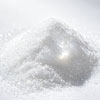
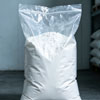
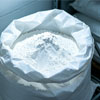
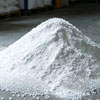
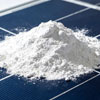
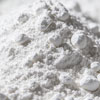
The answer: Sub-Titanium Dioxide Powder (亚钛粉) — a new-generation white inorganic functional filler that replaces 15–50% of TiO₂ while cutting costs and even improving material properties .

Part 1: Common TiO₂ Alternatives — A Quick Overview
Calcium Carbonate — Low cost but poor whiteness and hiding power, cannot meaningfully replace TiO₂.
Barium Sulfate — Chemically stable but low brightness, limited replacement ratio.
Kaolin Clay / Talc — Ultra-low cost but no whiteness or coverage, only use as general extenders.
Zinc Oxide — Good UV resistance but expensive, hiding efficiency much lower than TiO₂.
Lithopone — Historical standard but lower durability and coverage than TiO₂.
Hollow Plastic Pigments — Good opacity via air voids but expensive, weak brightness.
Conclusion: None of these alternatives can match TiO₂'s comprehensive performance — until now .

Part 2: The Breakthrough — Sub-Titanium Dioxide Powder (Sub-TiO₂)
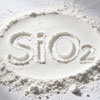
Developed by Anmi Micro & Nano, Sub-TiO₂ powder is a white inorganic functional filler composed of SiO₂, Al₂O₃, TiO₂, and MgO. Its near-spherical crystal structure, surface hydroxylation modification, and mechanical-chemical reaction process give it outstanding compatibility, dispersion, and chemical stability .
Key Product Series:
T366 — Pure white tone, general replacement for paints, inks, plastics, rubber
T366A — Blue-white tone, excellent UV/yellowing resistance, outdoor and coil coatings
T188 — Nano-grade, ultra-low oil absorption, up to 50% TiO₂ replacement, high-end coatings & masterbatch
T163 — Blue-white tone, high hardness, general industrial coatings
T166 — Blue-white tone, designed for water-based systems
T068/T068A — Yellow-white tone, cost-effective for powder coatings and plastics
Part 3: Why Sub-TiO₂ Powder Beats Other Alternatives
1. Real Cost Savings — Up to 30%
Replacing 15–30% of TiO₂ with Sub-TiO₂ powder can cut your filler cost by 20–40%. A color paste client reduced total production cost by 30% after replacing 15–25% of TiO₂ .
2. High Whiteness & Hiding Power
Whiteness ≥95% (room temperature), refractive index closely matching TiO₂. Finished products look nearly indistinguishable from pure TiO₂ formulations .
3. Superior Hardness & Scratch Resistance
Mohs hardness 5.2–6.5, far exceeding CaCO₃ (Mohs 3) and talc (Mohs 1). Improves finished product hardness by 30% or more .
4. Enhanced Weather Resistance
UV resistant, salt spray resistant, acid/alkali resistant, anti-yellowing. Improves overall material stability by 30% or more .
5. Excellent Dispersion
Low oil absorption (17g/100g for T366 series), no crystal water, near-spherical particles. No equipment modification needed — integrates directly into your existing process .
6. RoHS Compliant
0 formaldehyde, 0 heavy metals, meets EU RoHS and international environmental standards .
Part 4: Real Application Cases
Paints & Coatings — A coil coating client using 30 tons/month of rutile TiO₂ replaced 15–20% with T366A and T188, saving $600–700 per ton of formulation while maintaining performance .
Printing Inks — A gravure ink client replaced 15–20% of TiO₂ with T188, achieving significant cost savings with no quality loss .
Plastics & Masterbatch — A PVC pipe manufacturer replaced part of their TiO₂ with T366A, maintaining whiteness while substantially reducing raw material costs .
Rubber & Textile Coatings — A shoe material client used T166 to improve whiteness and reduce costs in white PVC coatings .
Conclusion
The search for "what can replace titanium dioxide" ends with Anmi Sub-TiO₂ powder series. It replaces 15–50% of TiO₂, cuts costs by 20–40%, and maintains or improves whiteness, hardness, and weather resistance. No compromise, no equipment changes — just a smarter, more cost-effective formulation.


