
The Titanium Dioxide Dilemma
Titanium dioxide (TiO₂) has long been the gold standard for whiteness, opacity, and brightness in coatings, plastics, and inks. But it comes at a price — one that has been climbing steadily due to supply chain constraints, environmental regulations on chloride-process production, and growing global demand. For formulators, the question is no longer whether to reduce TiO₂ content, but how to do it without compromising product quality.
Simply cutting back on TiO₂ leads to visible problems: lower hiding power, duller whiteness, reduced weatherability, and sometimes even yellowing over time. The industry needs a drop-in functional filler that can genuinel maintain optical performance while displacing a meaningful percentage of titanium dioxide.
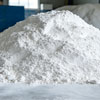
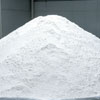
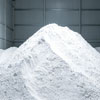
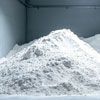
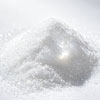
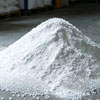
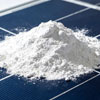
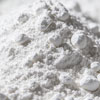
Sub-titanium dioxide powder is not a generic extender. It is a purpose-built composite white pigment engineered to replicate the particle size, shape, and optical behavior of TiO₂
— at a fraction of the cost.

What Is Sub-Titanium Dioxide Powder?
Developed by Anywhere New Material (Guangzhou) Co., Ltd., sub-titanium dioxide powder is an environmentally friendly white inorganic non-metallic functional powder. Through a proprietary process involving precise structural selection, particle size distribution control, surface hydroxylation, and mechanochemical reaction, the material achieves a morphology and particle profile remarkably similar to TiO₂.
The result is a functional filler that serves multiple roles simultaneously: carrier, nucleating agent, high hiding-power pigment, and dispersion aid — all in a single material that carries no water of crystallization and meets international heavy-metal-free standards including EU material controls and UK 7P regulations.
1.Optical Performance That Matches TiO₂
Unlike conventional calcium carbonate or barium sulfate extenders, sub-titanium dioxide powder achieves a whiteness of 93–99 (with the nano-grade T188 exceeding 98). Its hiding power is engineered through controlled refractive index and golden particle size distribution, not just bulk filling. This means the coating or compound retains its visual opacity and brightness even as TiO₂ content drops by 10–35%.
2.Weatherability That Outlasts Conventional Alternatives
One of the most common fears when replacing TiO₂ is yellowing or chalking under UV exposure. Sub-titanium dioxide powder addresses this directly: it contains no water of crystallization, exhibits high thermal stability, and resists UV light shock. In accelerated weathering tests (QUV, 1500 hours), the color difference ΔE remains below 2 — a level that conventional lithopone and calcium carbonate extenders cannot match.
3.Hardness and Mechanical Performance
With a Mohs hardness of 5.2–6.3, sub-titanium dioxide powder also contributes to the mechanical performance of the final product. In coatings, this means better scratch and abrasion resistance. In plastics, it improves surface hardness without brittleness. Conventional extenders like lithopone (Mohs 3–4) or talc (Mohs 1–1.5) simply cannot deliver this benefit.
4. Low Oil Absorption — More Resin Efficiency
The oil absorption value of 14–19 is significantly lower than many alternative fillers, which means less resin is required to achieve the same formulation viscosity. This translates to an additional 15% reduction in resin consumption on top of the TiO₂ savings — a double cost benefit that compounds across high-volume production.

Real-World Applications and Results
Case 1: Printing Adhesive Paste — Eliminating Residue
A manufacturer of white printing adhesive paste was experiencing reactive residue formation and agglomeration when using calcium carbonate as a filler. By switching to T163, they completely eliminated the residue problem while simultaneously reducing TiO₂ content by 30%. The final product showed improved whiteness and smoother dispersion.
Case 2: Exterior Thermal-Insulation Coating — 25% TiO₂ Replacement
In an exterior wall thermal-insulation coating formulation, T188 replaced 25% of titanium dioxide. The coating maintained a whiteness of 94–97 while the thermal insulation efficiency actually improved — a result attributed to the powder's optimized particle packing and thermal reflectance properties.
Case 3: Plastic Masterbatch — Stable Processing, No Oil Bleed
In PVC and PE masterbatch compounding, sub-titanium dioxide powder at 10–35% loading eliminated the oil-bleeding problem commonly associated with high filler loadings. The compounded pellets exhibited uniform whiteness and stable processing behavior across extrusion cycles.

How to Select the Right Grade
Choosing the correct sub-titanium dioxide grade depends on your formulation system and performance priorities:
High-end coatings and inks requiring maximum whiteness: T188 (nanoscale, pure white, universal)
Blue-white tinted systems (coatings, inks, adhesives): T163 or T166 (5000–5500 mesh, blue-white)
General-purpose plastics and rubber: T366 (3000 mesh, good balance of cost and performance)
Powder coatings and cost-sensitive applications: T068 (1500 mesh, high bulk gravity, economical)
Anywhere Powder's technical team provides free formulation consultation to help you select the optimal grade and replacement ratio for your specific application. Contact our engineers →
In an industry where raw material costs can swing 20–40% in a single quarter, having a proven, technically validated TiO₂ replacement strategy is not just an option — it is a competitive necessity.
Sub-titanium dioxide powder from Anywhere Powder offers a path to 10–35% TiO₂ cost reduction with verified whiteness, hiding power, weatherability, and mechanical performance.
For formulators who have been disappointed by generic extenders, this is the engineered solution that actually works.


