






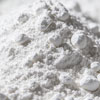
Glass Powder and Particle Technology
Distinctive properties make high-purity specialty glass or glass-ceramic powders and particles an important ingredient in dental, medical and cosmetics, sensor and electronics industries, as well as a broad variety of other technical applications.

What is glass powder?
Also referred to as ‘glass frit’ or ‘glass flux’, glass powder is glass that is milled down into very small particles, with a typical median grain size between 30 µm down to as fine as 0.1 µm. Customized sizes or distributions are also possible. Glass powder properties stem from the identity of the glass itself, as well as particle size and morphology. Depending on the composition, specialty glass powders can meet highly versatile requirements.
Glass Powders: function and applications
A broad range of properties make specialty glass powders an extremely versatile material that serves a broad range of use cases and applications.
Sealing and soldering of metals, ceramics or glasses
When used to electrically insulate, seal or join different materials, one of the key aspects for a durably stable bond are the coefficients of thermal expansion (CTE) of the materials to be joined. Application examples include Glass-to-Metal Seals, high-temperature applications (for example, Solid Oxide Fuel Cells), opto-electronic and MEMS packaging, or sensor technology.
Functional materials
Nano- and macro-porous glass powders offer excellent absorption and separation capabilities, which are ideal for applications such as filtration, chromatographic separation, or as a carrier for liquids and active substances.
Inorganic fillers
Polymer-based materials can be enhanced with thermal stability or optical features, while glass can be enhanced with mechanical or chemical resistance features. Some glass types even have (re-)active properties, such as bioactivity or ion release. Application examples include dental restoration, cosmetics, medical and polymer composites.
Protection for semiconductor devices
For example, to passivate and encapsulate thyristors, power transistors and diodes, sinter glass diodes and rectifiers, and high-voltage devices.
Printing materials
Applications include glass-on-ceramic screen printing, silicon wafer passivation or sensor technology. Glass powders also offer interesting use cases for 3D printing of complex glass bodies – for example, dental applications such as tooth implants, crowns, or bridges.


