
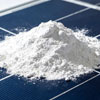
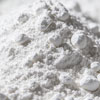
In the precision world of industrial coatings, achieving higher hardness without sacrificing processability is a delicate balancing act. A recent client request perfectly illustrates this challenge: an oil-based acrylic resin system needs to boost coating hardness from H to 2H using a 10μm scraper, while also delivering a matting effect.

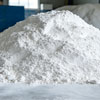
The client currently uses silica matting powder at 8%-9%, but its high oil absorption creates viscosity and dispersion issues. The solution lies in a different class of filler: Anmiweina T800 Glass Powder.
Why T800 Glass Powder is the Ideal Choice
1、Low Oil Absorption, High Loading – Unlike conventional silica matting agents that soak up resin and increase system viscosity, T800 features a significantly lower oil absorption value. This allows for a higher filler loading to achieve the target 2H hardness without negatively impacting flow or leveling.
2、Ultra-Fine Particle Size – With a D50 particle size suitable for thin-film applications, T800 disperses uniformly in coatings as thin as 10μm. Its fine, uniform particles ensure a smooth surface finish and consistent scratch resistance across the entire coated area.
3、Inherent Matting & Hardening – T800 Glass Powder naturally provides a matting effect while simultaneously increasing coating hardness (pencil hardness improvement of 3H-5H). This eliminates the need for separate matting agents, simplifying formulation and reducing raw material inventory.
4、Excellent Chemical Stability – Being an inorganic glass material, T800 is chemically inert, offering strong resistance to acids, alkalis, and UV degradation. This ensures long-term coating durability in demanding environments.

Application Recommendation
For acrylic resin systems targeting a 2H hardness at 10μm thickness, we recommend testing T800 at an addition ratio of 8-15% of the total formulation. For optimal dispersion, use low-speed mixing (200-300 rpm) during powder addition, then increase to 800-900 rpm once the powder is fully wetted.

The result? A coating that is harder, more scratch-resistant, and just as easy to apply—without the high-oil-absorption headache.


