
As demand for high-frequency electronics and magnetic components continues to rise, manufacturers are facing higher requirements for ferrite core strength and dimensional stability. However, during the sintering process, many companies struggle with deformation, collapse, and insufficient strength, especially when producing larger ferrite cores.
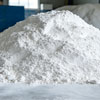
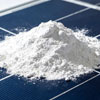
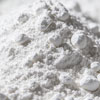
A magnetic materials manufacturer in Fujian, China, encountered these exact challenges after testing several conventional glass powders without satisfactory results. To improve the sintering performance, the company adopted Anmi Micronano’s B32 Low Melting Glass Powder in a formulation containing silicone resin, solvent, magnetic powder, and 3% B32.

For a 14 cm² ferrite core, the total sintering cycle lasted 3 hours, with a peak temperature above 700°C and a holding time of 1 hour. After switching to B32, the customer achieved noticeably better structural strength and reduced deformation during high-temperature sintering.
B32 showed stable softening and flow behavior, helping create a more uniform bonding phase between magnetic particles. This not only improved the overall strength of the ferrite core, but also reduced collapse and dimensional instability during production.

Compared with previously tested materials, B32 provided a more stable sintering process and improved production consistency. The customer also found that larger ferrite cores may require a higher glass powder ratio and longer sintering time to achieve optimal results.
The successful application of B32 demonstrates how low melting glass powders can help magnetic material manufacturers achieve more stable and reliable ferrite core sintering.


